In ‘X-Men'97,” Storm Shows Us How to Remember Who We Are
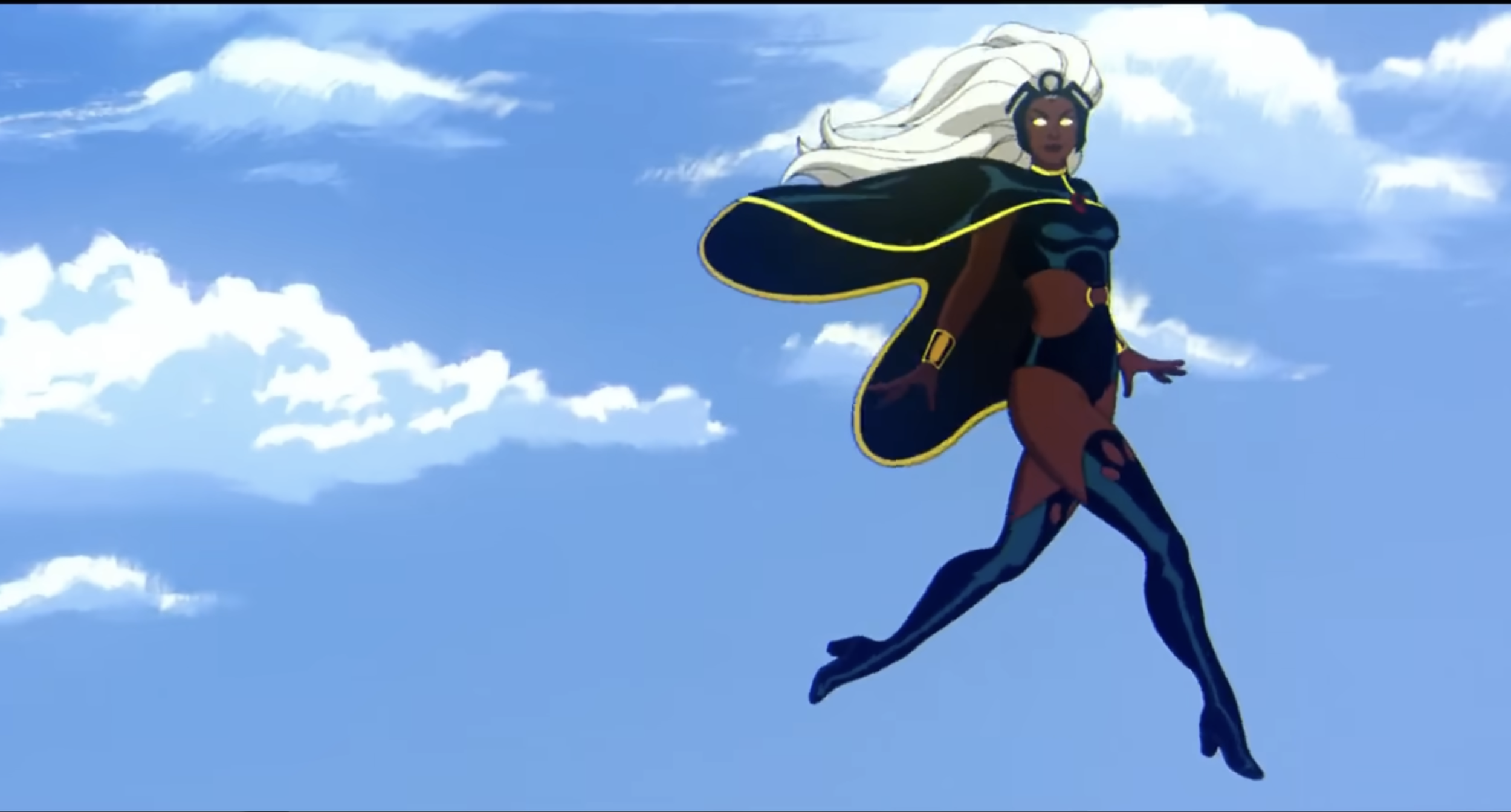
image of Storm from episode 6: Lifedeath part 2
“Don’t you ever let a soul in the world tell you that you can’t be exactly who you are”
Each of us experiences it, you know—journeying back to oneself.
Amid navigating an immensely capitalistic society, it’s easy to conform to an avatar or persona that pushes us to assimilate to the world. We’re made to believe this avatar/persona is the only way to succeed and we should collectively strive to become it.
This avatar represents the embodiment of cultural values and beliefs—a component of a quintessential “dream” notable in every country, including the States. While the dream feels like an unattainable myth for many, there’s a small voice convincing us we can re-imagine what it looks like within the confines of being marginalized or systemically displaced.
It’s probably why I gravitated to X-Men as a kid.
As a young Black girl in a divided society, I often felt like an alien. With the history of Black folks in America, one might conclude such, but I’m certain our collective contributions prove we’re more than deserving of being here.
Still, feeling alienated in various spaces isn’t uncommon.
I discovered other Black X-Men characters later in life, but Storm was my first introduction. It was easy to feel connected to her—to feel seen. The resurgence of X-Men‘97 undoubtedly satisfies my inner child, particularly with this version of Storm having a beautiful umber hue. It’s clear the creators understood the assignment.
However, when The Executioner snatched Storm’s powers with his neutralizer in episode five, Lifedeath Part 1, I felt an emptiness inside. How could Storm lose her powers? How is she no longer an X-Men? Clearly, I didn’t read any of the comics because it’s par for the course, but I was unprepared for the glow up that would happen in Lifedeath Part 2.
By this time, Storm and Forge are searching for the cactus cave, home to the plant that can cure the poison from the Adversary’s bite. With a bit of reluctance, Storm let Forge accompany her on the quest to get the plant and save him. However, inside the cave, Forge points to a small tunnel for her to crawl through to retrieve the plant. And if you’re familiar with Storm’s pantheon, you know she’s claustrophobic. However, despite her fear, she allows the severity of the situation to fuel her and enter the tunnel.
Watching her conquer what seems like her greatest fear was exhilarating. How often do we allow the preservation of life to lead us down our darkest and most uncertain paths? Our humanness doesn’t prevent us from doing extraordinary things.
She reaches the end of the crawl space and finds the cactus, but loses her flashlight. Completely symbolic of success being right at our hands; yet slipping through our fingertips. The darkness incites fear and its stench activates her inside thoughts aloud, in a reincarnated version of the Adversary.
Its physical being destroyed by Forge before heading to the cave; yet its essence lived on as a lower vibration, ready to feed off the trepidation it hungers for.
My takeaway: no one else can cure your personal demons. You are your own hero.
By ravishing Storm's fear, the Adversary creates the perception that the walls are closing in on her. But is it claustrophobia or being consumed by self-loathing over the loss of her power and subsequently feeling powerless? The yearning to save others or save overall and still be extraordinary, even without her powers.
The desire to be “human” believing conformity is the best option to avoid persecution.
But if we take all those narratives and remove the X-gene, the storyline really doesn’t change. It’s still 1997 and Black women, while finding their independence, continue to face microaggressions, pay inequities, condescendence, and invisibility from their white counterparts, and even Black men. So, does being “normal” make any difference?
Sounds like an illusion to keep us stuck.
Laurel Thatcher Ulrich and first lady Eleanor Roosevelt said it best, “well-behaved women seldom make history,” so why live in the shadows of what’s expected of you, and the smallness of what’s palatable to those who attempt to consume you? Why not lean into what makes you extraordinary? Take up space and let those who try to swallow you whole, choke.
“You all are an echo of who I am.”
Mash up of Beyonce's "American Requiiem" and Storm's resurgence of power
It brings me back to a piece I wrote about Hippolyta in Lovecraft Country.
Episode seven, I Am, teaches us about identity and self-actualization. Beyond C’est, a source of the universe, encourages Hippolyta to name herself and sends her traveling across multiple timelines where she experiences her greatest dream, rage, joy, and curiosity—an amalgamation of expressive essence encompassed in one name, her own.
“Let them thunder, for I am lightning.”
Despite the Adversary’s attempts to make Storm succumb to her fear, she perseveres and embraces her true self, acknowledging the truth:
That whether human or mutant, you have access to your divine power—a power that our ancestor Audre Lorde refers to as the erotic. Anyone can access this power, not just those claiming to be ordained. It is yours and there’s no need to be afraid to touch it, embrace, bathe in it, and feed off it.
It didn’t matter whether humans would continue their pursuit against her. Her unmatched power dared anyone to challenge her. Owning your true identity protects you from those who exploit your past or idiosyncrasies.
What feels like hours is only minutes before the “storm” brews and rises within. Soon we see more than an X-Men. We witness the alchemic transformation of a Goddess reclaiming mastery over the elements. That’s what it feels like to reclaim your power, to remember who you are.
It’s freeing.
The most freeing experience one could have.
Weapons may form to extract your power, but nothing can cease or deny what is innately and inherently yours. The enemy weapons appear as if the damage is permanent, but Storm’s actions of denying the lie, remembering who she is, and facing her greatest fear, show the enemy is nothing but an echo compared to our divinity.
Her reclamation of power is a testament that while we face unspeakable challenges and grief, our gift is the ability to alchemize our pain and transmute it into an unstoppable force.
No weapon forged doesn’t mean we won’t experience trials or conflict, but it affirms that triumph is not the outcome for the adversary.
For reference.
Until we meet again.
